From Climitigation to the field
Project Vesta
The public record of a climate idea moving from a think tank, to its first coverage and customer, to funded research and field deployment.
The project
Climitigation identified coastal enhanced weathering as an underfunded carbon-removal pathway. Project Vesta was founded to move that idea out of the literature and into carefully monitored real-world trials.
- Period
- 2019-present
- Status
- Independent project
- Records
- 12
Chronology
From origin to public record
Publication dates come from the linked publisher or project record. Archive-only dates are labeled.
- Milestone
Project Vesta begins inside Climitigation
Climitigation's search for overlooked, scalable carbon-removal approaches led to coastal enhanced weathering. Project Vesta was formed to assemble the science, funding, and fieldwork needed to test it.
Vesta describes 2019 as its founding year.
Vesta project history - Press
The first major public account
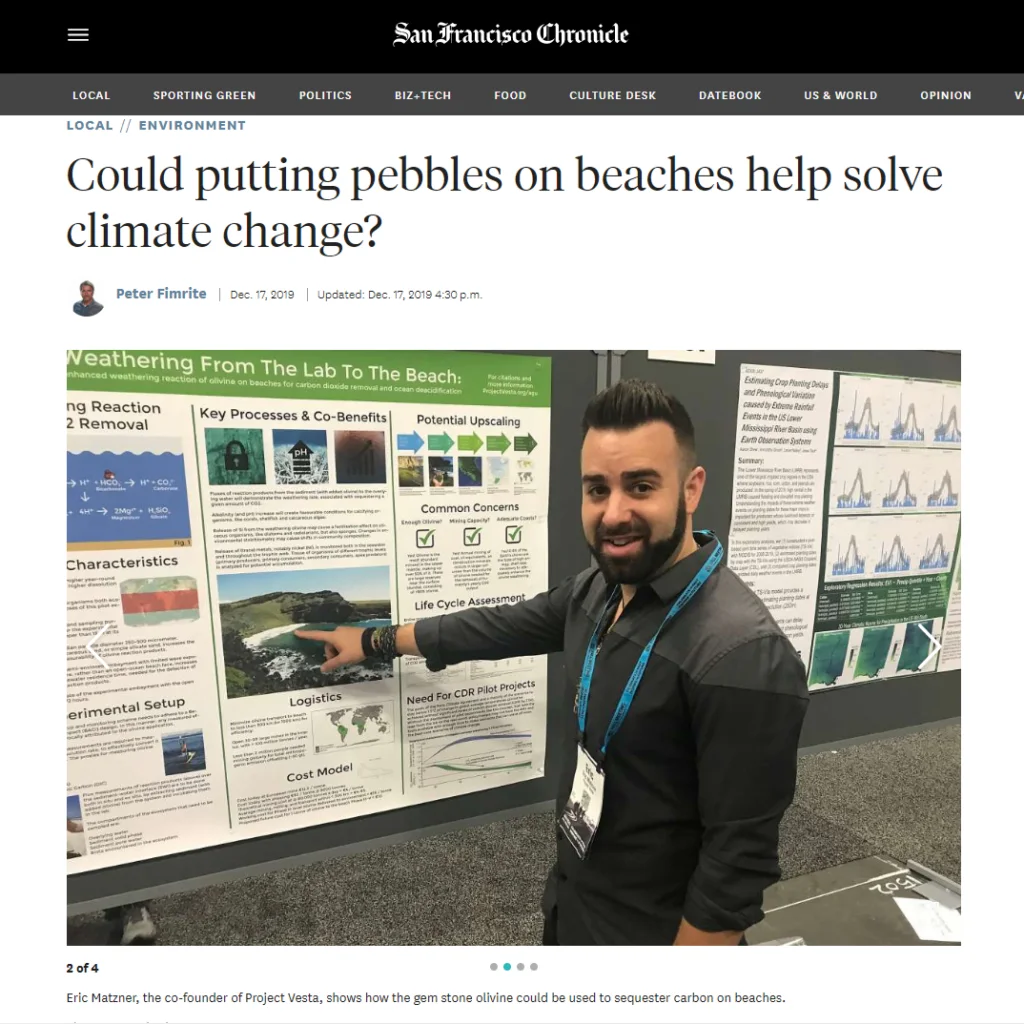
The San Francisco Chronicle introduced the beach-weathering proposal, its scientific questions, and Eric Matzner's plan to fund a first real-world pilot.
San Francisco Chronicle - Funding
Stripe becomes Project Vesta's first customer
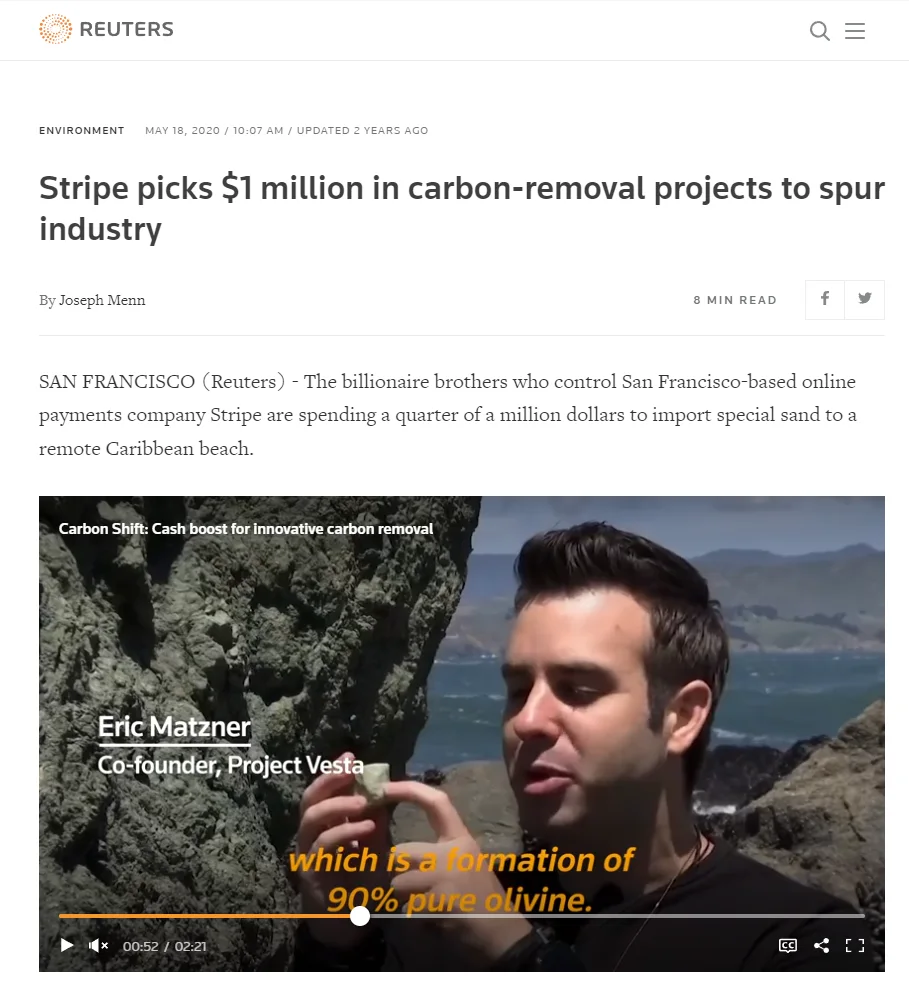
Stripe selected Project Vesta in its first carbon-removal purchases, buying 3,333.3 tonnes at $75 per tonne. The purchase was intended to accelerate safety studies and deployment.
Stripe Climate - Press
Mother Jones includes Vesta in the climate intervention debate
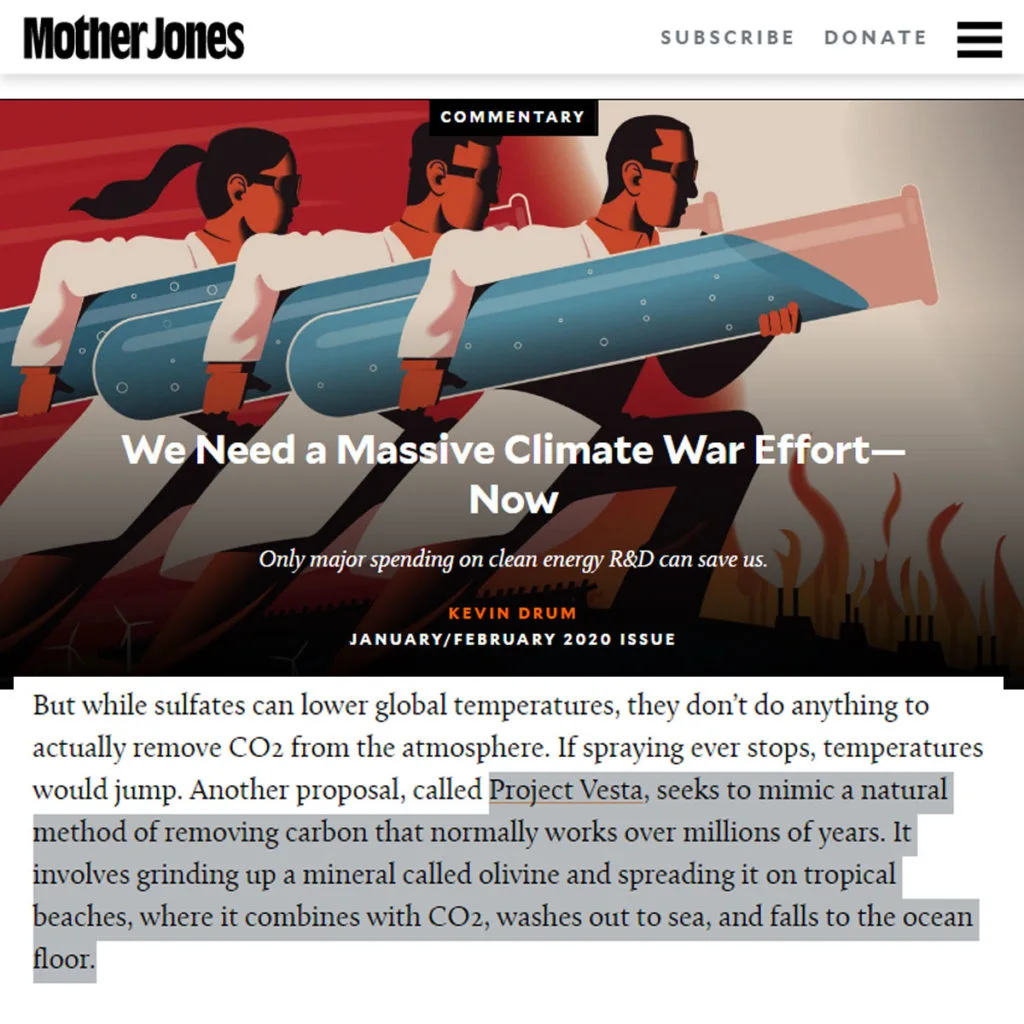
A Project Vesta press record preserved the magazine's description of olivine beaches as a proposed way to accelerate a carbon-removal process that normally unfolds over geological time.
Date shown is the Vesta archive date.
Vesta press archive - Film
Reuters follows the first wave of carbon-removal buyers
Reuters' Carbon Shift report placed Project Vesta alongside other early carbon-removal projects receiving a new kind of commercial support.
Reuters / Carbon Shift - Press
Fast Company traces Vesta back to Climitigation
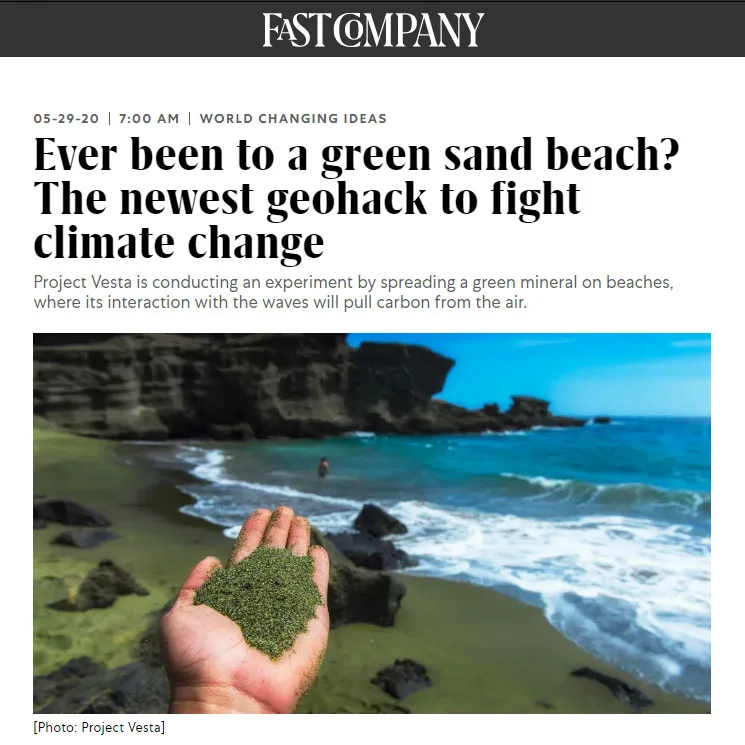
Fast Company reported on the proposed Caribbean pilot and recorded the project's origin in Climitigation's search for high-potential ideas receiving too little investment.
Fast Company - Press
MIT Technology Review examines the evidence and open questions
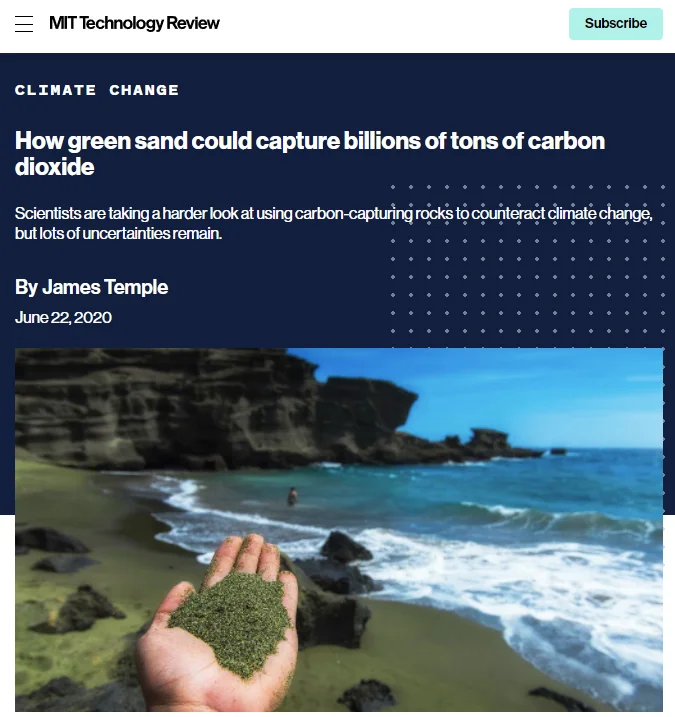
The feature widened the public discussion around green-sand carbon removal, including its scale, mineral supply, energy requirements, and the need for field validation.
MIT Technology Review - Funding
$1.6 million supports the scientific roadmap
Additional Ventures awarded Project Vesta a $1.6 million grant for laboratory and field studies, scientific hiring, and groundwork for its first beach pilot.
The December 2020 grant was announced March 16, 2021.
Project Vesta announcement - Film
The scientific inspiration is recorded
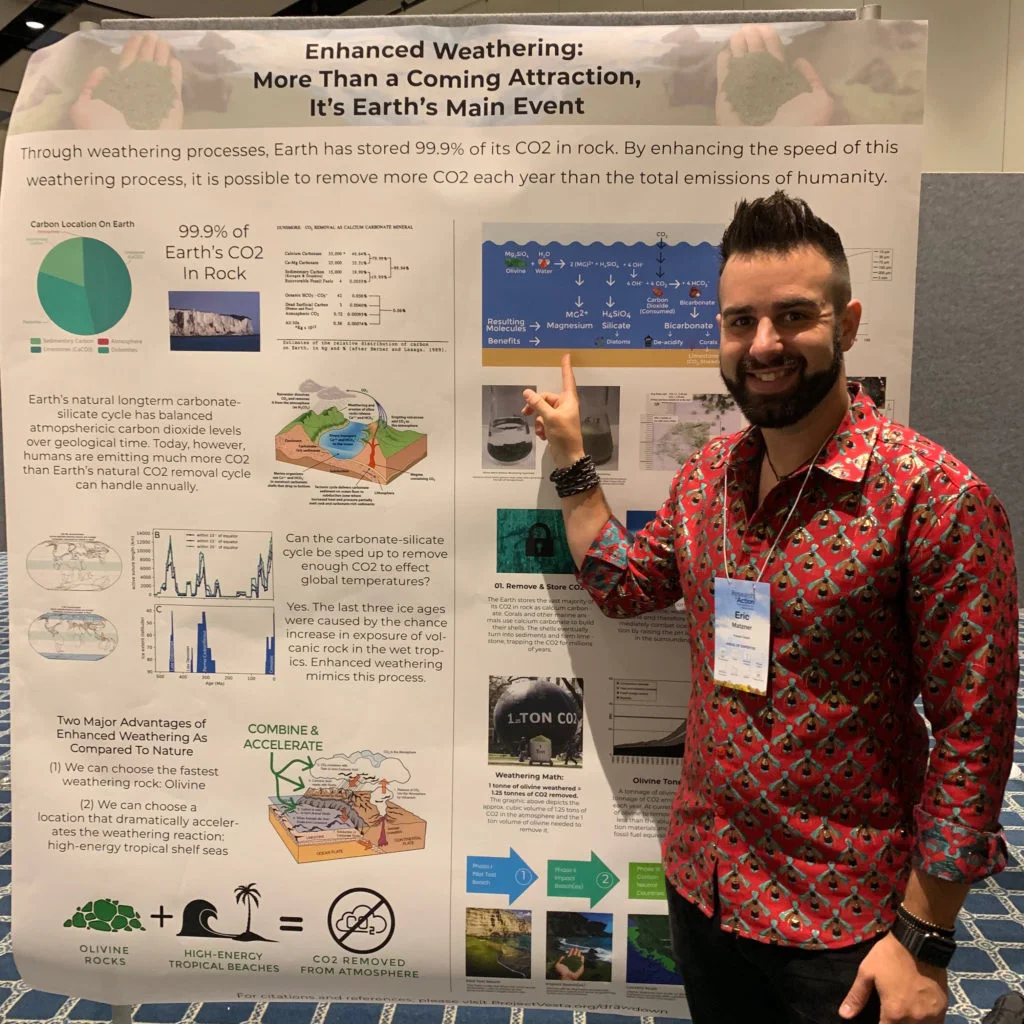
In a Climate Cleanup talk, Eric Matzner documented Olaf Schuiling's influence on Project Vesta and the effort to move olivine weathering from scientific literature toward deployment.
Climate Cleanup - Film
The CarbonCycle installation enters the public archive
An Eric Matzner archive film preserves the Project Vesta talk and CarbonCycle artwork presented at Planet Home EcoFestival, connecting the geochemistry to a public-facing installation.
Date shown is the archive upload date; the installation predates it.
Eric Matzner archive - Milestone
Vesta deploys its first standalone U.S. ocean CDR pilot
The independent company placed 8,200 metric tons of olivine sand off Duck, North Carolina, with a three-year independent monitoring program.
Vesta deployment announcement - Research
Peer-reviewed field study reports no oyster safety concern
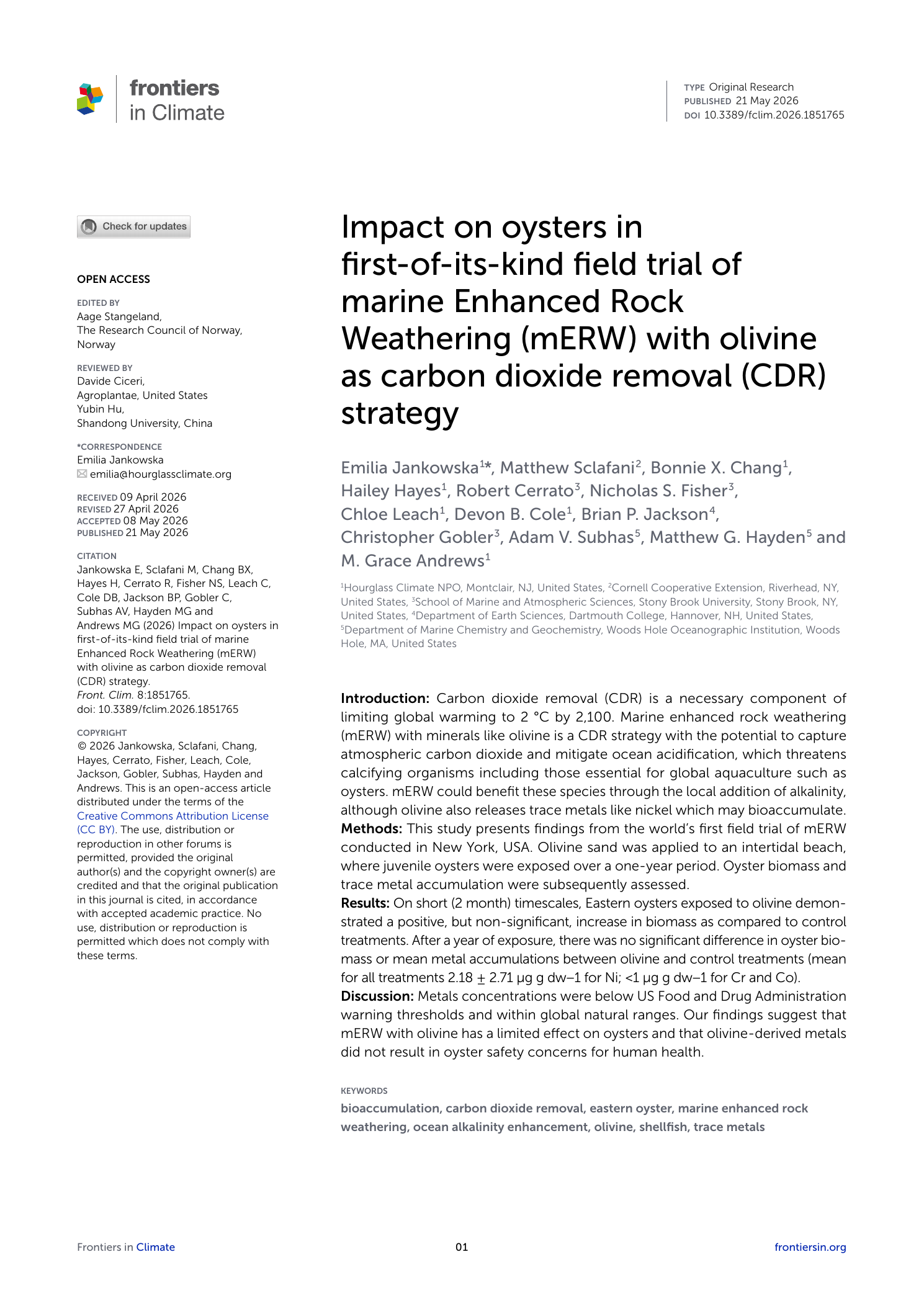
The one-year Southampton field study found no significant difference in oyster biomass or mean metal accumulation between olivine and control treatments. Metal concentrations remained below FDA warning thresholds and within global natural ranges.
Published online May 21, 2026 after peer review.
Frontiers in Climate